2026 Best Baby Diaper Manufacturers for Global Buyers

Time:2026-09-30 Author:Aria
0%

Choosing the right Baby Diaper manufacturer in 2026 requires more than comparing factory prices.

Global buyers must examine product safety, absorbency, skin comfort, production capacity, and export reliability. A bright package proves little. The real evidence appears in test reports, clean production areas, stable raw-material sourcing, and consistent samples.

As hygiene-product consultant Neil Farmer observes, “A good diaper must protect skin, manage moisture, and earn trust.” This practical standard guides the manufacturers reviewed in this article. It also reminds buyers that performance claims need verification, not admiration.

The strongest suppliers usually offer several Baby Diaper formats. These may include newborn diapers, pant-style diapers, overnight products, and private-label solutions. Their factories should explain core-sheet structure, absorbent polymer usage, elastic performance, and packaging controls clearly.

Look closely at details. Does the waistband remain soft after movement? Does the diaper stay dry after several hours? Can the supplier maintain the same quality across large orders? These questions matter more than polished brochures.

This guide evaluates leading manufacturers for international buyers. It considers factory experience, quality systems, innovation, minimum order quantities, customization, logistics, and communication. Certifications are useful, but they should support practical evidence.

No ranking is perfect. Market conditions change quickly.

Some manufacturers may appear strong on paper but respond slowly during urgent production issues. Others may lack marketing polish while offering dependable workmanship. Buyers should therefore request current samples, audit documents, test results, and transparent commercial terms before signing agreements.

The goal is simple: identify partners that can deliver safe, comfortable, compliant, and dependable Baby Diaper products at scale.
2026 Best Baby Diaper Manufacturers for Global Buyers

What Baby Diaper Manufacturers Produce and How They Operate

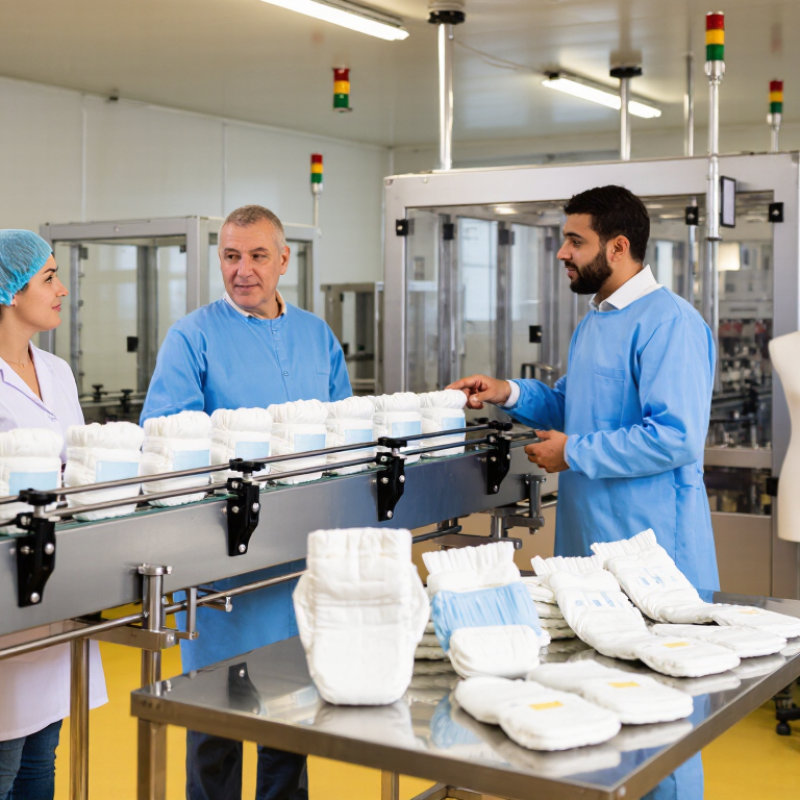
Baby diaper manufacturers produce more than disposable diapers. Their product range often includes newborn diapers, pull-up pants, training pants, and adult incontinence products. Some facilities also make wipes, changing mats, and absorbent pads. Each diaper usually combines a soft topsheet, absorbent core, leak guards, backsheet, fastening tabs, and elastic parts. Material choices affect comfort, leakage control, skin feel, and production cost.

Manufacturing starts with incoming material checks. Operators test pulp, absorbent polymer, nonwoven fabric, adhesives, and elastic components. Automated lines then form the core, add layers, cut the shape, and seal each unit. Quality teams inspect weight, dimensions, absorption, tensile strength, and packaging accuracy. They also monitor dust, humidity, machine speed, and hygiene conditions. Small process changes can influence thousands of finished pieces.

Global buyers often request private-label designs, different sizes, printed packaging, and carton specifications. Manufacturers usually provide samples before confirming mass production. Reliable factories maintain batch records and traceable inspection data. They should also explain their testing methods clearly. No factory is flawless. A delayed material shipment or rejected batch can expose weak planning. Experienced suppliers respond with corrective actions, not vague promises. Buyers still need independent checks, because a polished showroom cannot replace factory evidence.

Key Diaper Types and Manufacturing Capabilities

2026 Best Baby Diaper Manufacturers for Global Buyers

Key Diaper Types and Manufacturing Capabilities

Baby diaper suppliers now serve several distinct needs. Tape-style diapers support newborns and early-stage fitting. Pull-up pants suit active toddlers and faster retail packing. Training pants require softer side panels, stronger seams, and controlled stretch. According to Grand View Research, the global baby diapers market was valued at over USD 80 billion in 2023. Its forecast indicates continued growth through 2030, increasing pressure on production flexibility.

Reliable manufacturers should offer high-speed converting lines, automated inspection, and stable material sourcing. Key components include superabsorbent polymer, fluff pulp, breathable films, elastic threads, and hydrophilic nonwovens. A capable factory tests absorption, rewet, leakage, tensile strength, and fastening performance. Smithers’ hygiene industry reports emphasize lightweight designs, resource efficiency, and improved nonwoven technology. However, thinner does not always mean better. A rushed reduction in material can create leakage complaints.

Global buyers should examine batch traceability, laboratory records, and production consistency. ISO 9001 systems help, but certificates alone prove little. Ask for recent test reports and pilot samples. Some factories can produce biodegradable or chlorine-free options, yet these claims need independent verification. The real weakness is often communication. A technically strong supplier may still misunderstand sizing, packaging, or regional compliance requirements. Small details matter.

Quality, Safety, and Sustainability Standards in 2026

2026 Best Baby Diaper Manufacturers for Global Buyers

Quality, Safety, and Sustainability Standards in 2026

Reliable diaper manufacturers now need more than attractive prices. Buyers should examine production records, material specifications, and independent test reports. Safe products use skin-friendly materials, controlled adhesives, and absorbent cores tested for leakage and rewet. Factories should maintain batch traceability from incoming pulp to packed cartons. That detail matters during complaints or recalls. Quality systems aligned with ISO 9001 can support consistency, but certification alone does not prove excellent diapers.

Sustainability requires measurable evidence. Manufacturers should disclose fiber sources, packaging composition, energy use, wastewater controls, and factory emissions. Life-cycle thinking is becoming essential in 2026. A thinner diaper may reduce transport volume, yet poor absorbency can increase waste. Buyers should request recent audit findings, laboratory results, and corrective-action records. Not every green claim is meaningful. Some reports still lack complete data, and that deserves careful questioning.

Tips: Check samples after overnight use, not only in a showroom. Compare absorbency, softness, odor, fit, and package damage. Ask for chemical screening, microbiological controls, and production capacity during peak seasons. Verify whether sustainability claims cover the full product or only the packaging. A perfect supplier is unlikely. Transparent improvement is more dependable than polished promises.

How Global Buyers Evaluate and Compare Manufacturers

Global buyers should compare diaper manufacturers by verified performance, not brochure claims. Fortune Business Insights estimated the global baby diaper market at about US$87.9 billion in 2023, showing the scale of a crowded supply chain. Ask for recent test results covering absorbency, rewet, leakage, and fit. Check whether results match the exact product and production site being quoted. Review batch records, defect handling, and capacity during peak orders. A polished sample is not proof of a stable line; I would not treat it as one.

Tip: Send the same brief to each supplier. Specify core weight, size, packaging, monthly volume, and acceptable test limits. Request samples from normal production, then check them side by side. Record measurements, not just impressions. A small difference in waistband stretch can matter after hours of wear.

Compare lead times using actual shipment histories and ask how delays are communicated. The World Bank’s 2023 Logistics Performance Index assesses logistics across 139 countries, a useful reminder that delivery depends on more than factory output. Ask for recent on-time shipment data and references from comparable export markets. Also clarify who owns testing costs and how a failed batch is investigated. These details can expose gaps that a factory tour may miss.

2026 Best Baby Diaper Manufacturers for Global Buyers

How Global Buyers Evaluate and Compare Manufacturers

Suggested evaluation weights for a buyer scorecard, totaling 100%. These are planning weights, not results from a market survey; buyers should adjust them to fit product requirements, destination-market regulations, and sourcing priorities.

Leading Baby Diaper Manufacturers for Global Buyers in 2026

Leading Baby Diaper Manufacturers for Global Buyers in 2026

Global buyers should assess manufacturers beyond unit price. Grand View Research estimated the global baby diaper market at about USD 83.8 billion in 2023 and projected a 5% compound annual growth rate through 2030. That growth makes dependable production capacity and consistent quality important. Ask suppliers for recent production records, sample test results, and clear material specifications. Check fit, absorbency, leakage protection, and skin-contact layers across several sizes. A soft sample is not enough.

Strong manufacturers provide traceable quality checks and communicate openly when production changes. Review their line capacity, lead times, packaging options, and ability to manage repeat orders. Request samples from different production batches; small changes in leg cuffs or fastening tabs can affect real-world performance. Even a polished sample can mislead. Buyers should also confirm that product claims are supported by test documentation, rather than relying on sales language alone.

Tips: Test samples with caregivers in your target market. Record leakage, fit, and comfort after use. Compare results across sizes. Ask how the supplier handles defects and delivery delays, and get corrective actions in writing. A factory visit can help, but records matter too.

FAQS

What products can diaper manufacturers make?

Many produce newborn diapers, pull-up pants, training pants, and adult incontinence products. Some also make wipes, changing mats, or absorbent pads.

What materials are used in a typical diaper?

A diaper may contain a soft topsheet, absorbent core, leak guards, backsheet, fastening tabs, and elastic parts. Material choices affect comfort and leakage control.

How are diapers manufactured?

Incoming materials are checked before automated lines form the absorbent core, add layers, cut shapes, and seal each unit. Small process changes can affect many pieces.

What quality checks should buyers ask about?

Ask about tests for weight, dimensions, absorption, tensile strength, and packaging accuracy. Clear testing methods matter. Request recent records, too.

How can buyers check sample quality?

Test several sizes for fit, absorbency, and leakage protection. Caregivers can note comfort and leaks after use. One sample can mislead.

Why request samples from different production batches?

Leg cuffs and fastening tabs may vary between batches. Comparing samples can reveal changes that a polished sample might hide.

What should buyers review before placing repeat orders?

Review production capacity, lead times, packaging options, and batch records. Confirm how defects and delivery delays are handled, preferably in writing.

Can a factory visit guarantee consistent quality?

A visit can show equipment and working conditions, but it cannot guarantee every batch. Traceable inspection records help. Still, uncertainty remains.

Conclusion

This guide explains what Baby Diaper manufacturers produce and how their operations support buyers across different markets. It introduces common diaper types and manufacturing capabilities, including options designed for different ages, absorbency needs, product formats, and production volumes. It also outlines how manufacturers manage materials, production processes, and quality checks to deliver consistent products.

For global buyers in 2026, comparing suppliers involves more than price. The guide highlights practical considerations such as product performance, manufacturing capacity, quality and safety systems, sustainability practices, customization, communication, and delivery reliability. It also describes how buyers can assess leading manufacturers against these criteria and identify partners suited to their business requirements, without relying on brand names or a one-size-fits-all ranking.

Aria

Aria

Aria is a dedicated marketing professional with a deep passion for innovative strategies and a keen understanding of our company's product offerings. With a wealth of experience in the industry, Aria excels at crafting engaging content that highlights the unique features and benefits of our......