Choosing a Disposable Baby Diaper for wholesale is not simply a price comparison. It is a practical decision involving absorbency, fit, materials, packaging, and repeat-purchase potential. Grand View Research valued the global disposable baby diapers market at more than USD 80 billion in 2023. Its forecast also indicates continued growth through 2030, driven by urbanization, rising incomes, and demand for convenient infant care. Fortune Business Insights reports similar expansion, although market estimates differ because researchers use different product definitions and regional data. That difference deserves attention.
Quality becomes visible on a changing table. A diaper should feel soft, stretch around the waist, and remain secure after several hours. Pediatrician Dr. Tanya Altmann offers a useful principle: “A good fit helps prevent leaks and skin irritation.” Wholesalers should test that principle directly. Compare newborn, medium, and large sizes. Check the waistband after movement. Examine the inner sheet after liquid testing. Do not trust absorbency claims alone.
The lowest unit cost can be misleading. A thin diaper may create more complaints, returns, and damaged retailer relationships. A premium design may sell slowly in price-sensitive markets. Wholesale buyers need evidence from samples, factory audits, technical specifications, and customer feedback. Certifications can support trust, but they should be verified independently. Packaging also matters: clear size markings, production dates, and readable instructions reduce warehouse mistakes. No forecast predicts every baby’s skin response. That is the uncomfortable part. A careful buying process still needs revision after real-world sales.
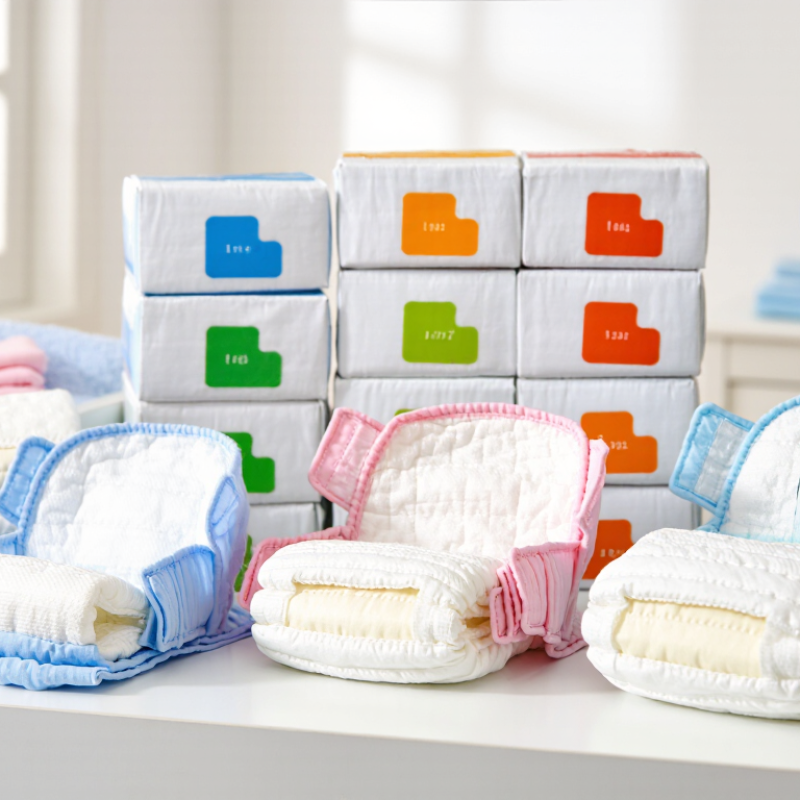
Disposable baby diapers are not one uniform product. The main type is the taped diaper, which uses fastening tabs around the baby’s waist. It suits newborns because caregivers can adjust the fit while the baby lies down. Taped diapers often provide clear space for frequent changes. That matters in hospitals, nurseries, and busy homes.
Pull-up diapers have an elastic waistband and slide on like underwear. They work well for active babies who resist lying still. However, caregivers may find them less convenient during messy changes.
Overnight diapers usually contain a thicker absorbent core and wider leak guards. They can support longer sleeping periods, but extra bulk may affect movement.
Swim diapers are different. They hold solid waste while allowing water to pass through. They are not designed for urine absorption.
For wholesale purchasing, compare each type by size range, absorbency, softness, fastening strength, and packaging efficiency. A practical test involves checking leakage after several hours, not only touching the dry product. Observe whether the leg cuffs leave marks. Ask suppliers for material details, production records, and safety test documentation. Try samples with different body shapes because a perfect fit on one baby may fail on another. No type is perfect. Pull-ups may sell quickly, yet taped diapers remain essential for younger infants. A low unit price can also hide higher return rates or poor packing quality. 马会
Wholesale buyers should judge materials before chasing the lowest unit price. The global baby diaper market reached about USD 83.2 billion in 2023, according to Grand View Research’s 2024 market report. This scale increases pressure on suppliers, but volume does not guarantee quality. A practical sample should include a soft, breathable topsheet, evenly distributed cellulose fluff, and superabsorbent polymer with stable retention. Avoid vague claims such as “natural” or “chemical-free.” They rarely explain performance.
Absorbency needs measurement. Ask suppliers for liquid acquisition time, rewet values, retention capacity, and leakage results under movement. EDANA’s absorbent hygiene product testing guidance supports controlled laboratory comparisons, although laboratory results cannot fully copy overnight use. Check samples after repeated wetting. Look for clumping, cold gel pockets, or a sagging core. Small details matter. A 2024 report from Research and Markets identifies skin health and improved leakage protection as important diaper purchasing factors, but its market estimates should not replace independent testing.
Skin safety requires more than fragrance-free labeling. Request ingredient disclosure, microbiological controls, and testing for irritation or sensitization. A breathable backsheet may reduce trapped moisture, yet excessive airflow claims can distract from poor fit. Inspect waist edges by hand. They should stretch without leaving sharp pressure marks. I would also test diapers during warm, active days, not only in a warehouse. Our judgment can be imperfect, especially when one baby’s skin reacts differently from another’s. Recheck supplier data, because certificates may cover materials rather than the finished diaper.
Wholesale buyers should match diaper sizes to real customer patterns, not only carton quantities. Measure demand by baby weight, age range, climate, and daily usage. Weight remains the most reliable starting point. However, fit can vary between children with similar weights. Ask distributors about leakage complaints, red marks, and overnight needs. These details reveal more than sales totals. Keep a practical size mix, including newborn, small, medium, large, and extra-large options. Too many cartons in one slow size can lock up cash and warehouse space. Too few smaller sizes may disappoint new parents.
Feature selection should follow customer priorities. For hot climates, breathable outer layers and softer waistbands may matter most. For overnight use, buyers usually look for absorbent cores, secure leg cuffs, and wetness indicators. Sensitive-skin customers may prefer fragrance-free materials and clear ingredient information. Do not treat every feature as essential. Extra softness can raise costs without improving fit. Test samples through movement, sitting, and several hours of wear. Check seam strength, absorbency, packaging clarity, and manufacturing consistency. One weak area can damage repeat orders.
Before placing a large order, request technical specifications, independent test records, and sample cartons. Verify the stated size range against actual measurements. That step is easy to skip. It should not be. Review customer feedback after the first shipment, then adjust the size ratio. Forecasts can miss seasonal changes, birth rates, and local preferences. Leave room to revise quantities instead of treating the first plan as permanent. A careful review may expose flaws in your original assumptions.
Matching diaper sizes and features to customer needs
The chart shows common retail weight bands used to match disposable diaper sizes with babies’ weight. Wholesale buyers should stock more mid-range sizes, especially Medium and Large, while also considering local birth rates, growth patterns, overnight absorbency, wetness indicators, stretchable waistbands, and sensitive-skin materials. Size ranges can vary by supplier, so always confirm the exact specifications before placing an order.
Choosing disposable baby diapers for wholesale requires more than comparing carton prices. Start by checking the supplier’s production experience, factory capacity, and quality control records. Request recent test reports for absorbency, leakage resistance, materials, and skin-contact safety. The documents should match the actual product, not a different sample. Ask how often inspections occur. A clear answer matters.
Order samples before placing a large purchase. Examine the diaper under normal use conditions, including overnight wear and movement. Check the softness of the inner sheet, stretch of the waist, strength of the tabs, and dryness after liquid absorption. Measure several samples from one carton. Small differences may reveal unstable production. I once focused too heavily on packaging quality and missed uneven elastic tension. That mistake changed my inspection checklist.
Private label projects need careful communication. Confirm the minimum order quantity, printing method, packaging materials, barcode details, and production timeline in writing. Request a pre-production sample with the final artwork. Confirm that size marks and usage instructions are readable. Your supplier should explain how rejected units are handled and how batch records are maintained. Quality standards may vary by market, so review applicable safety and labeling requirements before production. A polished package cannot fix poor diaper performance. It is also wise to leave time for another sample review, because rushed approvals often create avoidable problems.
Wholesale diaper purchasing depends on more than the quoted unit price. Compare prices by size, absorbency, packaging, and material specifications. A lower price may hide thinner padding or fewer pieces per carton. Request a complete quotation with currency, taxes, product details, and validity dates. Then calculate the landed cost, including freight, insurance, customs handling, and local delivery. Small details matter. A clear comparison sheet helps prevent emotional buying decisions.
Tips: Check the minimum order quantity before negotiating. A large MOQ may reduce the unit price but tie up cash and warehouse space. Ask whether mixed sizes or trial cartons are allowed. Confirm production time, inspection procedures, and replacement terms in writing. Also review shipping terms carefully. Determine who books transport, who pays freight, and when risk transfers. Incoterms can prevent confusion, but only when both sides understand them.
Shipping schedules deserve practical attention. Ocean freight may cost less, while urgent orders can make air transport expensive. Ask for carton dimensions, gross weight, loading capacity, and estimated departure dates. These figures support realistic freight calculations. Payment terms also influence the final cost and risk. Avoid judging suppliers from one quotation alone. It is easy to overlook storage losses or delayed replenishment. A cautious buyer may accept a slightly higher price for dependable quality, accurate documents, and stable delivery performance. Still, assumptions can fail, so test a small order before committing to larger volumes.
Start with baby weight, then compare age range, climate, and daily usage. Keep newborn, small, medium, large, and extra-large sizes available. A practical mix beats equal carton quantities. Ask about leakage and red marks.
Babies with similar weights can need different fits. Check waist comfort, leg openings, and movement during sample testing. A size chart can mislead. Real feedback matters more.
Breathable outer layers and softer waistbands may improve comfort. Test diapers after movement and sitting, not only while standing. Extra softness can raise costs without improving fit. That trade-off deserves review.
Look for absorbent cores, secure leg cuffs, and wetness indicators. Test several hours of wear before approving a large order. Check leakage around the legs and back. Overnight results can surprise you.
Some customers prefer fragrance-free materials and clear ingredient information. Review material details before comparing prices. Do not treat every feature as essential. Customer preferences still vary.
Compare size, absorbency, packaging, and material specifications together. A lower price may hide thinner padding or fewer pieces per carton. Calculate landed cost, including freight, insurance, handling, and local delivery. The cheapest quote may not be cheapest.
Confirm the minimum order quantity before negotiating unit prices. Ask whether mixed sizes or trial cartons are possible. A large minimum order can trap cash and warehouse space. Test first.
Confirm carton dimensions, gross weight, loading capacity, and estimated departure dates. Clarify who books transport, pays freight, and carries risk during shipping. Review payment terms and replacement procedures in writing. Assumptions can fail.
Request technical specifications, independent test records, and sample cartons. Verify stated size ranges against actual measurements. Review customer feedback after the first shipment. The first forecast may be wrong. Adjust quantities when evidence changes.
Choosing the right Disposable Baby Diaper for wholesale requires a careful review of product types, materials, performance, and supplier reliability. Buyers should compare common options such as taped, pull-up, and specialized diapers, then evaluate softness, breathability, absorbent core performance, leak protection, and skin-friendly features. Understanding available sizes and designs is also essential for serving customers with different ages, weights, activity levels, and preferences.
Wholesale buyers should select suppliers that provide consistent quality, clear product specifications, dependable production capacity, and recognized safety testing. Private label options may help businesses create a distinct market position, while flexible customization can support different packaging and product requirements. Finally, compare unit prices alongside minimum order quantities, payment conditions, lead times, and shipping terms. A balanced decision should consider total cost, product quality, customer demand, and long-term supplier cooperation rather than focusing only on the lowest quotation.

Bangbao