Choosing the best Biodegradable Diaper supplier requires more than comparing prices or reading attractive sustainability claims. A reliable supplier should explain its materials clearly, including bamboo fiber, plant-based films, absorbent pulp, and adhesive components. Each layer matters.
Ellen MacArthur, founder of the Ellen MacArthur Foundation, says, “A circular economy is based on the principles of designing out waste and pollution.” Her words offer a useful test for diaper sourcing. Does the supplier reduce unnecessary plastic? Can it provide credible evidence about biodegradation? Are its claims supported by independent laboratory testing?
Look beyond the sample pack.
Request material specifications, product safety reports, factory audits, and batch-quality records. Check whether testing covers leakage, skin contact, absorbency, odor control, and packaging durability. A diaper may contain biodegradable parts while still using conventional elastic or synthetic barriers. That difference should never be hidden in small print.
Supplier experience also matters. Ask how many years the factory has produced baby-care products and whether it can maintain consistent absorbency across large orders. Visit the production site when possible. A clean floor, labeled storage, controlled humidity, and traceable raw materials reveal more than polished brochures.
No checklist is perfect. Even careful buyers can overlook supply interruptions or unclear disposal instructions. I would question any supplier promising rapid biodegradation everywhere, because temperature, moisture, and waste conditions vary widely. A responsible partner admits these limits, communicates test methods, and improves its product openly. The best choice is not always the cheapest option. It is the supplier that combines transparent evidence, dependable manufacturing, practical performance, and honest environmental responsibility.
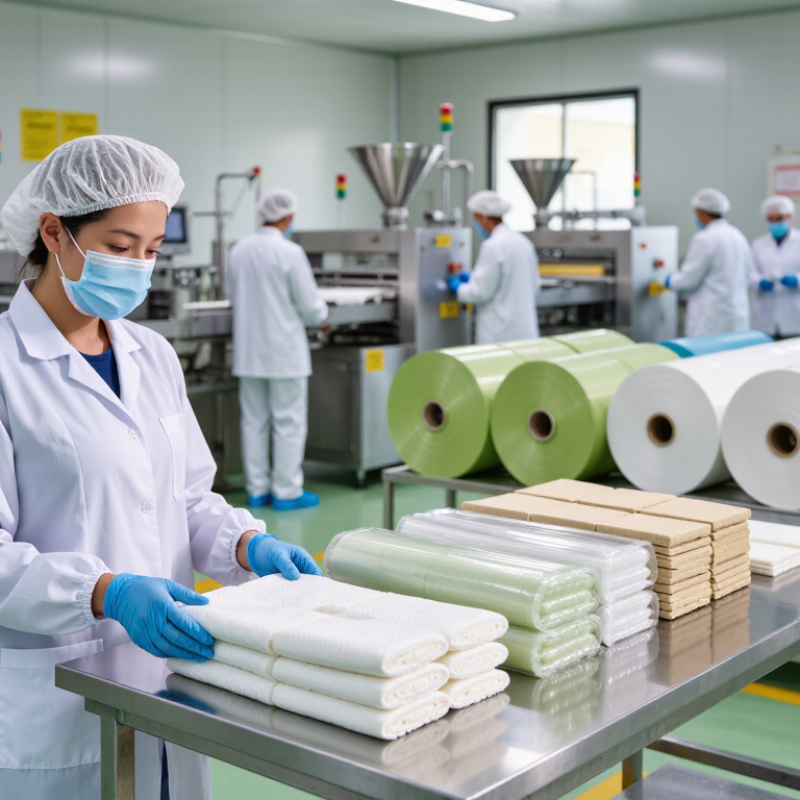
A credible biodegradable diaper supplier is defined by evidence, not by green language. The supplier should explain which components can biodegrade, under what conditions, and within what timeframe. “Plant-based” alone proves very little. A diaper may contain bamboo fibers yet still use synthetic adhesives, elastic, or plastic films.
Reliable suppliers provide material specifications and independent laboratory test reports. They should identify the testing method, sample conditions, and report date. Factory audits also matter. Review production areas, wastewater controls, storage practices, and quality checks when possible. Traceability should reach the raw material source. Ask for batch records, not only a polished presentation.
Performance must remain practical. Check absorbency, leakage resistance, skin-contact safety, odor control, and packaging materials. A diaper that breaks down faster but fails overnight is not a responsible choice. Products should also meet relevant safety and environmental requirements in their target market. Claims need careful wording.
No supplier is perfect.
I have learned that early samples can hide production weaknesses. Request repeated samples from different batches. Compare them after use, not just by appearance. Ask difficult questions about disposal conditions, rejected products, and improvement plans. A dependable supplier welcomes verification, admits limitations, and updates documentation when materials change. That openness often defines genuine professionalism more clearly than a biodegradable label.
Choosing a biodegradable diaper supplier requires more than a plant-based label. I ask for a full bill of materials, not a marketing summary. It should identify cellulose, superabsorbent polymer, films, elastics, adhesives, inks, and fragrance. The OECD’s Global Plastics Outlook reported 353 million tonnes of plastic waste in 2019, with only 9% recycled. That figure makes material transparency practical, not decorative. I look for renewable-content percentages, forest-source evidence, and the exact polymer used in the backsheet. “Biodegradable” is incomplete without conditions.
Safety files should include recent batch certificates, restricted-substance screening, microbiological controls, and traceability from factory to shipment. Ask whether testing covers formaldehyde, heavy metals, phthalates, fragrance allergens, and skin irritation. An ISO/IEC 17025-accredited laboratory adds confidence, but one passing report is not enough. Production changes can alter absorbency or adhesive residues. I would also inspect complaint rates and recall procedures. This is where suppliers often sound stronger than their records.
Environmental claims need test methods, timelines, and disposal settings. ASTM D5511 or ISO 15985 results describe controlled anaerobic biodegradation. They do not prove rapid breakdown in a landfill, soil, or home compost. ISO 14021 guidance also expects clear boundaries for self-declared claims. Request the complete report, sample conditioning, percentage degraded, and residual material. Compare a product life-cycle assessment with actual factory energy, water, and waste data. UNEP’s 2023 plastics report warns that plastic pollution could nearly triple by 2040 without major action. I still leave room for doubt: a neat certificate may hide an incomplete assessment.
| Assessment area | What to assess | Relevant factual benchmark | Evidence to request from the supplier | Score (1–5) |
Decision guide |
|---|---|---|---|---|---|
| Fiber and absorbent core | Identify the origin and processing of fluff pulp, tissue, and other cellulose fibers. | Wood-based fibers should be traceable to legal and responsibly managed sources. FSC or PEFC chain-of-custody certification can support forest-source verification. | Current certificates, certificate scope, fiber percentage, country of origin, recycled-content statement, and chain-of-custody records. | 1–5 | Prefer documented traceability over general “natural” wording. |
| Superabsorbent polymer | Determine whether the absorbent core contains SAP and how its environmental limitations are communicated. | Most disposable diapers use sodium polyacrylate SAP. “Biodegradable diaper” should not automatically be interpreted as a completely biodegradable product unless the full product has been tested and the disposal conditions are stated. | Bill of materials, SAP type and percentage by weight, biodegradation test report if claimed, and a clear explanation of what component the claim covers. | 1–5 | Reject vague claims that do not define product scope. |
| Backsheet and film | Review the polymer used for the waterproof outer layer and whether it is fossil-based, bio-based, compostable, or biodegradable. | Bio-based content describes feedstock origin; it does not by itself prove biodegradability or compostability. Compostability depends on the material, test method, and controlled conditions. | Polymer specification, bio-based carbon test where applicable, additives list, and certification or laboratory report for the exact finished product. | 1–5 | Separate “bio-based,” “biodegradable,” and “compostable.” |
| Elastic components and adhesives | Check elastics, construction adhesives, fastening systems, inks, lotions, and surface treatments. | A product-level environmental claim can be misleading if small but non-degradable components are excluded from the stated scope. | Full bill of materials, restricted-substance declaration, safety data sheets where applicable, and component-level test reports. | 1–5 | Require disclosure of every material that affects the claim. |
| Biodegradation claim | Verify whether the claim applies to the entire diaper or only to a component. | A credible claim should state the test method, test environment, duration, pass criteria, product form tested, and exclusions. Industrial, soil, freshwater, and marine biodegradation are different conditions. | Independent laboratory report for the finished product, test standard, sample identification, test conditions, and percentage or endpoint achieved. | 1–5 | Do not accept a component test as proof of whole-diaper biodegradability. |
| Compostability claim | Confirm whether the product is intended for industrial composting, home composting, or neither. | ASTM D6400, EN 13432, and ISO 17088 are recognized frameworks for assessing compostable plastics or packaging under specified conditions; certification scope must match the finished product. | Valid certification or accredited test report, disintegration and biodegradation results, ecotoxicity/heavy-metal results, and disposal instructions. | 1–5 | Treat “compostable” as conditional, not an invitation to home compost used diapers. |
| Chemical safety | Assess substances that may contact a baby’s skin, including dyes, fragrances, lotions, preservatives, inks, and process residues. | “Free from” claims should identify the exact restricted substances and test limits. A fragrance-free design can reduce one potential irritant category but does not prove overall safety. | Restricted-substance list, batch test reports, migration or extractable testing where relevant, and conformity documents for the destination market. | 1–5 | Prioritize quantified limits and independent testing. |
| Skin-contact performance | Evaluate pH, friction, leakage, rewet, breathability, and irritation potential during normal use. | Safety is not established by material names alone. Finished-product testing and documented quality controls are needed because moisture, pressure, and wear affect skin exposure. | Finished-product dermatological or irritation assessment, pH and rewet data, leakage test protocol, and production quality records. | 1–5 | Compare results using the same diaper size and test protocol. |
| Certification validity | Check that certificates are current, authentic, and issued for the actual factory, material, or finished product being purchased. | Certification logos do not prove every environmental or safety attribute. Scope, certificate number, expiry date, product model, and manufacturing site must align. | Public certificate record or verification link, certificate scope, audit date, validity period, and applicable production-site details. | 1–5 | Score zero for expired, unverifiable, or mismatched certificates. |
| Environmental data quality | Assess whether the supplier measures environmental impact across raw materials, manufacturing, transport, use, and end of life. | A life-cycle assessment should define functional unit, system boundaries, assumptions, allocation rules, data sources, and review status. Carbon footprint alone does not represent total environmental impact. | Product carbon-footprint or LCA report, methodology, data year, third-party critical review where available, and comparison basis. | 1–5 | Prefer transparent data to unsupported percentage reductions. |
| Manufacturing controls | Review consistency of absorbency, dimensions, lot traceability, contamination control, and change management. | Environmental materials do not compensate for poor product quality. A documented quality-management system supports repeatable safety and performance. | Quality certificate, incoming-material controls, batch records, inspection plan, complaint procedure, recall process, and change-notification policy. | 1–5 | Require corrective-action records for repeated defects. |
| End-of-life instructions | Confirm how users should dispose of unused and used diapers in the target market. | Used diapers generally contain human waste and multiple bonded materials. They should not be flushed unless local authorities and the product instructions explicitly permit it. | Country-specific disposal guidance, packaging wording, municipal acceptance evidence, and confirmation of whether used diapers are excluded from composting claims. | 1–5 | Clear disposal guidance is essential for responsible claims. |
| Regulatory and claim compliance | Check that packaging and marketing claims are specific, substantiated, and suitable for the sales region. | Environmental claims should not imply universal biodegradation, zero waste, or guaranteed environmental superiority without evidence and qualifying conditions. | Claim-substantiation file, label artwork, legal review, test reports, market-specific conformity declaration, and records supporting every environmental statement. | 1–5 | Remove claims that cannot be verified by an independent reviewer. |
| Total supplier assessment score | ____ / 60 | Use with mandatory safety and claim checks | |||
Choosing the best biodegradable diaper supplier requires more than attractive environmental claims. Compare product quality through material specifications, batch records, and independent test reports. A reliable diaper should feel soft, hold moisture, and stay secure during movement. Examine the absorbent core, inner liner, fastening tabs, and elastic edges separately. Small defects often appear around the leg openings. During sampling, inspect several sizes from different production batches. One sample proves very little.
Certifications need careful verification. Check the certificate number, covered product, production site, testing standard, issue date, and issuing organization. Biodegradable materials may break down only under controlled industrial conditions. Ask for the test method, time frame, temperature, and remaining residue. A certificate without clear technical details offers weak evidence. Also review factory hygiene, quality controls, complaint handling, and batch traceability. These details reveal professional reliability.
Performance testing should use identical conditions for every supplier. Compare absorption capacity, rewet, leakage, breathability, and skin-contact safety. Use the same liquid volume, temperature, pressure, and testing time. Ask for results from realistic use, not only maximum laboratory capacity. A pilot order can expose packaging damage, inconsistent sizing, or slow response. No test predicts every baby’s experience. Fit and skin sensitivity vary. I would record weak results honestly. A supplier willing to discuss failures may deserve more trust.
How to Choose the Best Biodegradable Diaper Supplier
Manufacturing capacity should be verified with records, not confident promises. Ask for monthly output, production lines, shift schedules, and current utilization. Request recent defect rates, inspection reports, and equipment maintenance dates. Smithers’ 2023 hygiene products report highlights supply resilience as a growing purchasing concern. A factory may advertise 20 million diapers monthly, yet 90% of capacity could already be committed. Small details matter. Check whether backup machinery exists for pulp, absorbent cores, and packaging.
Pricing requires a complete landed-cost model. Compare raw materials, tooling, laboratory testing, packaging, freight, duties, and storage. Grand View Research’s 2024 disposable diaper market analysis shows continued market expansion, but growth can increase pressure on material prices. A low quotation may exclude testing or biodegradable-content verification. That is a costly surprise. Ask suppliers to separate fixed costs from variable costs and explain adjustment rules for pulp and polymer prices. I would also request three quotations using identical specifications. Otherwise, the comparison is weak.
Delivery performance needs measurable commitments. The World Bank’s 2023 Logistics Performance Index treats reliability and timeliness as essential logistics indicators. Request production lead time, booking deadlines, port options, and emergency procedures in writing. Review at least six months of on-time delivery data. Confirm carton dimensions before ordering; oversized cartons can reduce container efficiency. Do not accept “fast shipping” as evidence. A pilot order can reveal weak communication, inconsistent absorbency, or damaged cartons. My own evaluation would still leave room for doubt, because one successful shipment cannot prove long-term reliability.
A practical evaluation model for manufacturing capacity, pricing, delivery performance, and compliance.
The percentages represent a neutral procurement scoring framework and should be adjusted according to order volume, target market, certification requirements, and service-level priorities.
Choosing a biodegradable diaper supplier is less about attractive claims and more about verifiable performance. The OECD’s Global Plastics Outlook reports that only 9% of plastic waste was recycled globally between 1950 and 2019. This makes material transparency essential. Ask suppliers for fiber composition, adhesive details, biodegradation conditions, and independent laboratory reports. Ask for evidence.
A dependable partner should provide stable production records, batch-level traceability, and clear quality procedures. Request samples from different production dates, not only one polished sample. Check absorbency, rewet, leakage, odor, and skin-contact materials under consistent test conditions. ISO 2859-1 sampling methods can support objective inspection. A supplier should also explain its corrective-action process when defects appear.
Small details matter.
Long-term cooperation requires more than a low quotation. Review delivery history, capacity during peak seasons, worker-safety documentation, and financial resilience.
The UNEP report Turning off the Tap states that plastic pollution could be reduced by 80% by 2040 through system-wide changes, including better product design and reuse.
This supports evaluating the supplier’s full material and waste strategy, not just the word “biodegradable.” I would be cautious with suppliers promising universal compostability, because local facilities and testing conditions differ. A transparent supplier admits these limits, shares updated certificates, and joins quarterly reviews. An audit can miss problems. Therefore, keep incoming inspections and performance scorecards after the contract is signed.
Review the absorbent core, inner liner, fastening tabs, and elastic edges separately. Check softness, moisture holding, and security during movement. Inspect several sizes from different production batches. One sample is weak evidence.
Look closely at leg openings, where small defects often appear. Check sizing, odor, leakage, rewet, and packaging condition. Compare samples from different production dates. A polished sample may hide inconsistency.
Request the certificate number, covered product, production site, testing standard, and issue date. Confirm the issuing organization independently. Ask for technical documents, not only a certificate image.
No. Some materials degrade only under controlled industrial conditions. Ask about temperature, testing time, methods, and remaining residue. Local facilities may not support the claimed process. I would remain cautious.
Use the same liquid volume, temperature, pressure, and testing time. Compare absorption, rewet, leakage, breathability, and skin-contact safety. Realistic-use testing matters. Maximum laboratory capacity can mislead.
Request stable production records, batch traceability, and written quality procedures. Review factory hygiene and complaint handling. Ask how corrective actions are documented. Small details reveal working discipline.
A pilot order can expose packaging damage, slow responses, and inconsistent sizing. It also tests delivery performance under practical conditions. Problems may appear late. That possibility matters.
Continue incoming inspections and maintain a performance scorecard. Review delivery history, defect rates, complaints, and corrective actions quarterly. Audits can miss problems. My judgment could still be wrong.
Choosing the best Biodegradable Diaper supplier requires more than reviewing product descriptions. A dependable supplier should clearly explain the materials used, such as plant-based fibers, biodegradable films, and skin-friendly components, while providing evidence for safety, biodegradability, and environmental claims. Buyers should assess product quality through absorbency, leak protection, softness, fit, and durability testing. Independent certifications, transparent testing reports, and consistent production standards can help confirm that the diapers meet required expectations.
It is also important to evaluate the supplier’s manufacturing capacity, minimum order quantities, pricing structure, customization options, lead times, packaging, and delivery reliability. A suitable long-term partner should have stable quality control, clear communication, responsive customer service, and the ability to scale production as demand grows. By comparing these factors carefully, businesses can select a supplier that offers dependable performance, responsible materials, competitive value, and sustainable cooperation over time.

Bangbao